Škoda’s Stint
Skoda’s journey in India is a fascinating tale of segment-defining products, brand consolidation, and resilience. Over 25 years, this Czech automaker has navigated market swings, regulatory twists, and changing consumer priorities—emerging as an enduring name in an otherwise turbulent market for global automakers.
Entering India and Early Years
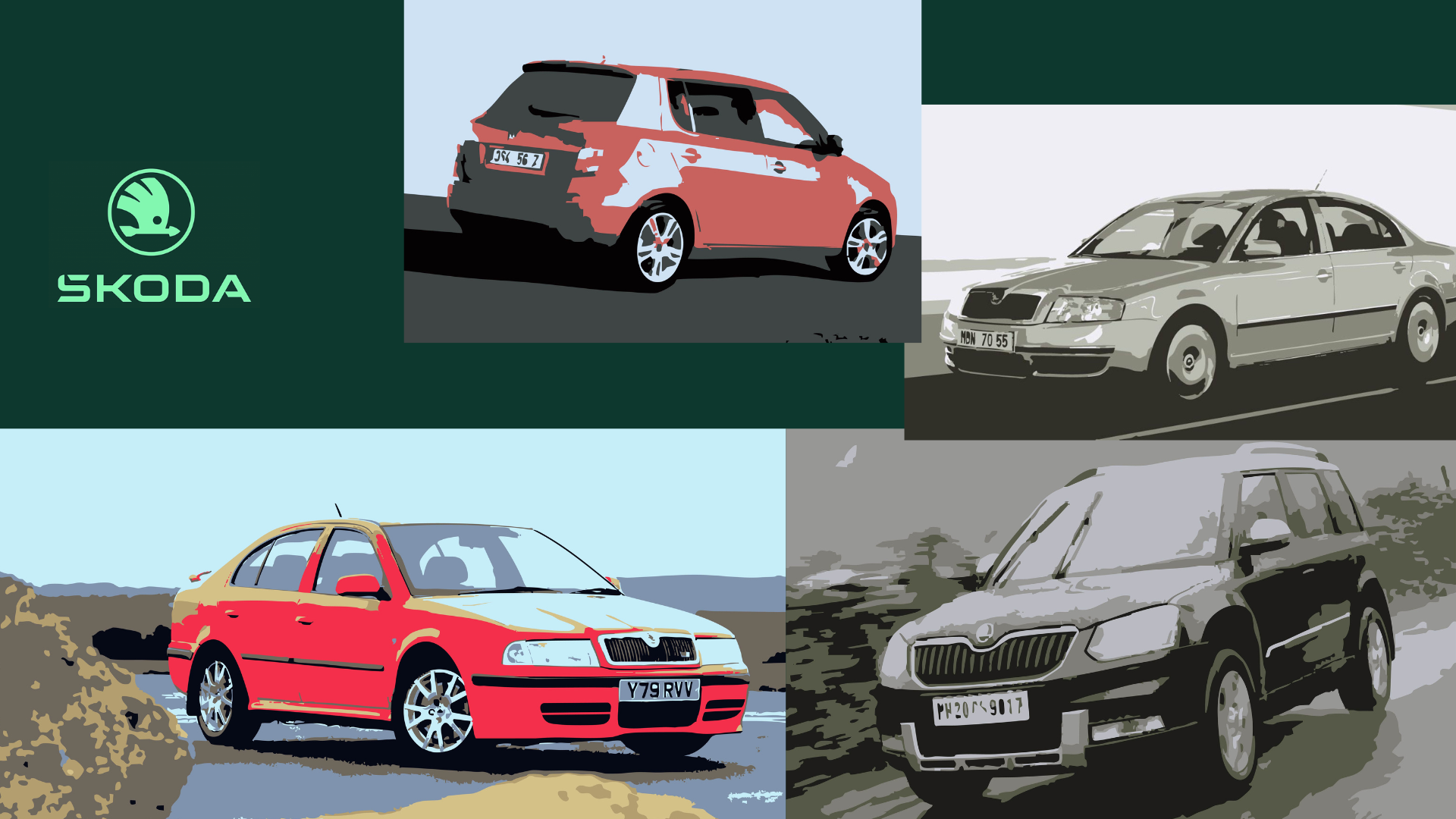
Czech marque Škoda entered India in 2000, arriving as a full-fledged subsidiary of the Volkswagen Group at a time when the local car industry was freshly liberalized and starved of innovation. The debut product, the Octavia, instantly stood out. Its robust build, tech derived from Volkswagen, and a powerful diesel engine set new standards. Skoda essentially democratized luxury, with the Octavia heralded as a “poor man’s E-Class” by pundits—solidly built, comfortable, and hugely practical with a cavernous boot and high-speed stability.
Octavia’s success allowed Škoda to establish a quasi-luxury image—an unusual reversal of its reputation elsewhere in Europe, where the brand was historically synonymous with budget transportation and reliability issues. In India, the Octavia and later the Superb were positioned as premium, value-driven alternatives to established luxury marques.
The Quest for Mass Appeal
Seeking higher volumes, Škoda introduced the Fabia, a “premium hatch” that was ahead of its time in quality, comfort, and driveability. However, it proved too premium—and costly—for cost-sensitive Indian buyers. Weak engine options and expensive upkeep further dampened its appeal. Despite a brief volume boost, the Fabia proved financially unviable, as VAG India was losing money on each one they sold, highlighting not only the brand’s but the Euro auto group’s persisting challenge: balancing a global product standard with price-sensitive realities of the Indian Market.
The tooling for the Fabia was apparently offered to Tata motors after Škoda India stopped production Q3 2013. However, Tata must have realised the inherent cost that was associated with the model and did not see a business case among other factors. Market in India has been repeatedly observed to be particularly sensitive to body style value perception as well as the price-to-size ratio, a lesson Škoda would learn shortly after, the hard way……. again.
Brand Evolution
Skoda’s core edge has always been its engineering-driven DNA, inherited from Czech automotive traditions and honed by Volkswagen Group technology. Signature models like the Octavia and Superb offered quality, space, and driving satisfaction that rivaled far more expensive European brands. Skoda ingeniously ran two generations of Octavia and Superb together for years, squeezing more value and extended relevance from older platforms—a tactic emulated by Indian market leaders.youtube
The brand faced bumps, particularly the notorious issues with the DQ200 dual-clutch automatic gearbox. These reliability problems, and a sometimes patchy service reputation, tarnished its standing. Yet, the company responded by opting for simpler gearbox options on newer models—demonstrating adaptability.
SUV Foray & Market Dynamics
The Yeti marked Škoda’s foray into SUVs, arriving before the segment’s boom but offering genuine all-rounder capability and quirky design unlike many models of today. However, its high price, relatively modest size, and lack of an automatic option limited sales. The model’s DNA, though, influenced later SUVs. As the Indian market rapidly pivoted towards SUVs in the 2020s, Skoda recalibrated with new launches more in tune with buyers’ preferences for size and perceived value—culminating in products like the Kushaq and Kodiaq. These models targeted critical segments but faced fierce competition and pricing pressures.
With Škoda learning the importance of perceived value, and price-to-size ratio often in the Indian market with the discontinuation of the Yeti, they introduced the popular Kodiaq which remains a success in the market space it competes in. The balancing act may pay off in volumes, however, for a brand built upon the foundations of accessible luxury, Skoda’s committment to localised models will/has hurt it’s premium credentials and eventually brand positioning in the market.
Leadership, Strategy, and Internal Headwinds
For much of its tenure, Škoda went on being the VW Group’s torchbearer, despite its “second sibling” global image. While Škoda has been more flexible on local supplier integration and often beat Volkswagen in value and local cost control, it sometimes suffered from high input costs and lack of full autonomy—group-level decisions limited its agility. Tha Čzech-origin automaker’s flexibility has been on showcase with many fresh models in untraversed segments for the Group are often badged as a Škoda instead of a Volkswagen. To take nothing from the Teutonic, understated appeal VW carries along in the Indian market, the core Škoda traits just seem better suited to a market like India.
Product gaps, an inconsistent model strategy (including discontinuation of key premium nameplates like the Octavia and Superb) influenced in large part by evolving market trends, and frequent leadership changes contributed to market instability. Škoda’s initial post-India 2.0 strategy led to it overtaking Volkswagen in sales, but management turmoil saw its numbers fall from 48,000 in 2023 to just 35,000 units in 2024, while VW figures remained steadier.
What Škoda does so well
For all the aftersales flak they get, Škoda in India is regarded as an executive brand that has been offering Indians a world-class motoring experience that’s good value as well. The ones who have always kept an eye out on upcoming Škoda models are the enthusiasts- one may question Skoda India’s manegerial approach in certain aspects, however, one can’t deny the engineering integrity behind the products. From the Yeti, which could be a ride-and-handling benchmark for SUVs developed a decade later, to the driver’s favourite Octavia and Laura or even the odd Fabia which felt better built than cars twice its price and delivered a premium big-car experience in a humble hatchback body.
The dynamic package has always been a highlight of Škoda models in India, serving as an inherent attribute to permeate everything from a sub-million Kylaq to half-a-crore rupee Superb. Back in the early-2000s, Škoda made sure the Superb won’t be perceived as anyhting less than club-class when the type was offered in V-type 6-cylinder powerplants. Even in 2026 when performance models are non-existent in the sub-60 lakh rupee segment, Škoda’s CBU Octavia vRS is a welcome departure from white goods.
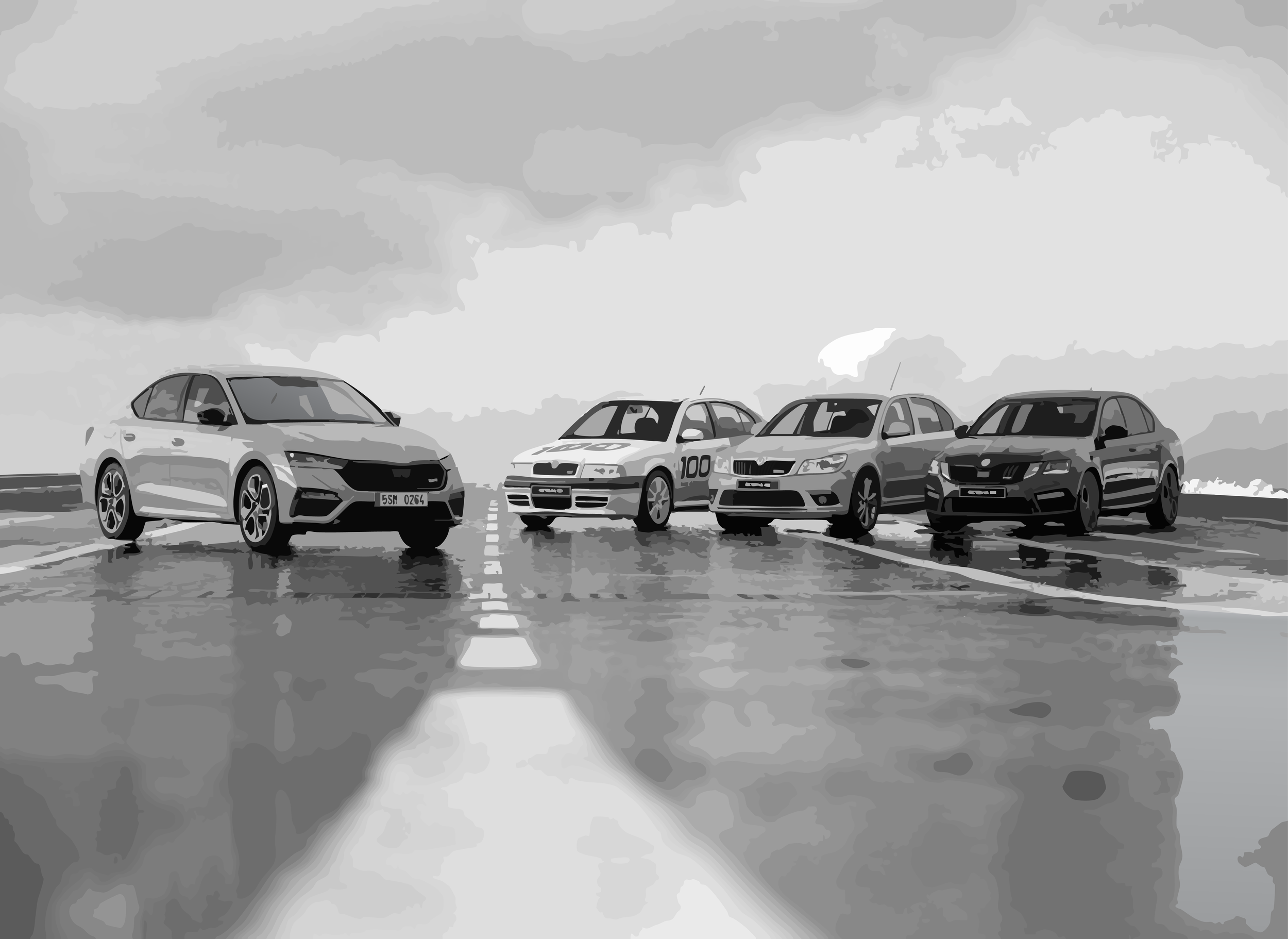
A legacy…
….built upon performance. Skoda’s Octavia vRS is the only affordable performance car model to hit India shores with every single generation.
Looking Ahead
In 2026, Škoda finds itself at a crossroads. Plans are afoot for more compact SUVs, crucial for mass-market penetration. The brand wrestles with legacy tax disputes, slow progress on electrification due to high costs and regulatory barriers, and an industry-wide transition to SUVs and electrified vehicle platforms. There’s optimism in upcoming SUVs and a renewed focus on core values—solid build, safety, and driving dynamics—but regaining lost ground remains a challenge. Škoda however, has created for itself an enviable market position in Indian market the likes of which Honda had in the earlier part of 2010s. It’s seen as a maker of premium, solidly put together, safe, and above all- high performing motor vehicles.
Škoda brand name does carry with itself a degree of character, something many automakers don’t and its this character combined with the global might of VW group coupled with the Indian market potential is what should make us confident of Škoda’s stint in India. But it doesn’t, while players like Renault are betting again with their best numbers, and Honda along with certain others are to follow suit, Škoda does not seem to have similar plans for India. While talks with JSW are underway indicating future partnerships Škoda’s legacy is one built upon models which aren’t sold anymore, the powertrains which once were the industry standard aren’t there on the market. In essence, as Skoda marks its 25th year, it stands as a survivor—innovative and respected, yet wrestling the changing tides of the Indian automotive scene. What Škoda represents goes far beyond the badge itself—a personality that feels increasingly rare in today’s push for “cleaner mobility.” A name that stands for motoring, not crash ratings or inadequacy compensations on poster in a scramble to find identity. In a world where most cars wrangle for attention, a Škoda quietly puts a genuine smile on your face while you navigate a ghat road- a noble act indeed.
